Building OG: Governance Infrastructure for Algorand & Voi
Onchain governance as reusable infrastructure for the AVM ecosystem — lower the barrier to launching, participating in, and integrating governance on Algorand and Voi.

The next wave of Web3 adoption will not come from launching more tokens.
It will come from making coordination easier.
Today, launching onchain governance is still too fragmented for most teams. DAOs and protocols are forced to stitch together snapshot systems, custom voting contracts, treasury tools, discussion forums, multisigs, proposal indexing, and frontend infrastructure — often across multiple chains and incompatible standards.
That friction slows ecosystems down.
At Nautilus Labs, we've been thinking about a different approach:
- What if governance was infrastructure?
- What if a protocol in the Algorand or Voi ecosystem could deploy governance the same way developers deploy authentication, analytics, or payments?
That's the idea behind OG.
What is OG?
OG stands for Onchain Governance.
It's a governance platform designed for the Algorand Virtual Machine (AVM) ecosystem — including both Algorand and Voi Network — focused on lowering the barrier to launching and operating governance systems.
The goal is simple:
- Make governance easier to launch
- Make governance easier to participate in
- Make governance easier to integrate
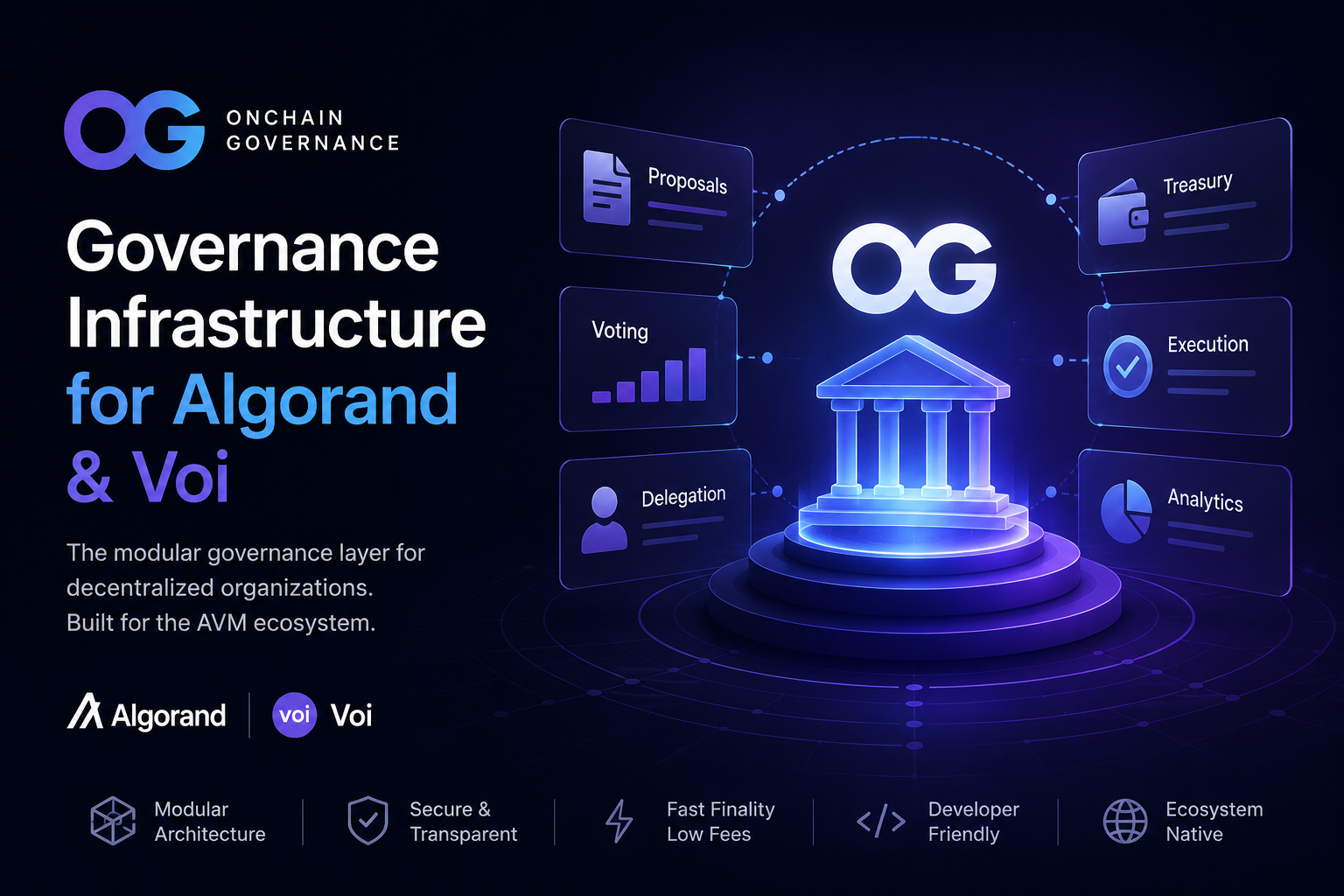
Instead of every protocol rebuilding the same primitives, OG aims to provide governance as a reusable layer.
Think:
- Proposal creation
- Voting infrastructure
- Treasury execution
- Delegation
- Governance indexing
- Historical proposal archives
- Participation analytics
- Cross-chain governance extensions
- Governance APIs and embeddable UI components
All in one system.
Why Governance Infrastructure Matters
The AVM ecosystem has matured significantly.
Protocols are no longer just experimenting with swaps or staking contracts. Teams are now operating:
- Lending markets
- DEXs
- Bridges
- Liquid staking systems
- NFT marketplaces
- Stablecoin protocols
- Ecosystem treasuries
As these systems mature, governance becomes unavoidable.
But governance tooling has lagged behind.
Many teams still rely on:
- Discord polls
- Manual treasury coordination
- Custom scripts
- Ad hoc proposal formats
- Offchain spreadsheets
- One-off governance contracts
This creates operational risk and raises the barrier for smaller teams that want to decentralize.
OG is being designed to reduce that friction.
Governance as a Product
One of the interesting things about governance is that most users don't actually want "governance."
They want:
- Transparency
- Coordination
- Treasury accountability
- Clear proposal history
- Easier participation
- Better signaling
- Reduced operational overhead
Good governance tooling should feel invisible.
The ideal experience is:
- Connect wallet
- View proposals
- Vote
- Track execution
- Stay informed
That's it.
The complexity should live underneath the interface — not on the user.
Built for Algorand and Voi
OG is specifically being designed around AVM-native workflows.
That means thinking beyond generic EVM governance assumptions and leaning into what makes Algorand and Voi different:
- Fast finality
- Low fees
- Native multisig and LogicSig patterns
- ARC standards
- Box storage
- ARC-28 events
- Indexer-friendly architectures
- High-frequency interactions without gas anxiety
Governance UX changes when transactions settle in seconds and cost fractions of a cent.
The system can support:
- Frequent proposal activity
- Real-time treasury operations
- Richer participation models
- Onchain archival systems
- Fully transparent execution history
…without creating painful user experiences.
Governance Beyond Voting
Governance is often reduced to voting.
But governance is really about coordination systems.
Over time, governance platforms evolve into:
- Treasury management systems
- Identity and reputation layers
- Ecosystem coordination hubs
- Incentive distribution systems
- Contributor coordination frameworks
- Delegation and representation networks
The long-term vision for OG is broader than proposals alone.
It's about building the operational layer around decentralized organizations.
Lowering the Barrier to Entry
One of the biggest opportunities in Web3 right now is enabling smaller builders to launch governance earlier.
Historically, governance systems were only feasible for large protocols with:
- Dedicated smart contract teams
- Custom frontend infrastructure
- Treasury operations staff
- Governance specialists
But ecosystems grow faster when governance primitives become accessible.
If launching governance becomes easy:
- More ecosystems decentralize earlier
- More contributors participate
- More communities coordinate effectively
- More treasuries become transparent
- More protocols survive long-term
That is ultimately the direction OG is trying to push toward.
What Comes Next
OG is still early.
Right now, the focus is on building the foundational infrastructure:
- Governance architecture
- Proposal indexing
- Archival systems
- Treasury execution patterns
- Governance event tracking
- Cross-protocol compatibility
- Clean user experience
The long-term goal is straightforward:
Make launching governance on Algorand and Voi feel normal.
Not a six-month engineering project.
Just infrastructure.
Request Early Access
OG is currently in private beta as the governance architecture and infrastructure layer continue to evolve.
We're looking for:
- Algorand protocols
- Voi Network projects
- DAOs
- Ecosystem operators
- Treasury managers
- Governance contributors
- Early testers and design partners
If your team is interested in launching or improving onchain governance infrastructure, you can request access directly from the landing page.
We're building OG alongside the ecosystem — with feedback from the teams actively operating protocols, communities, and treasuries today.