Markets, Reward Pools, and Multi-Pools on Algorand

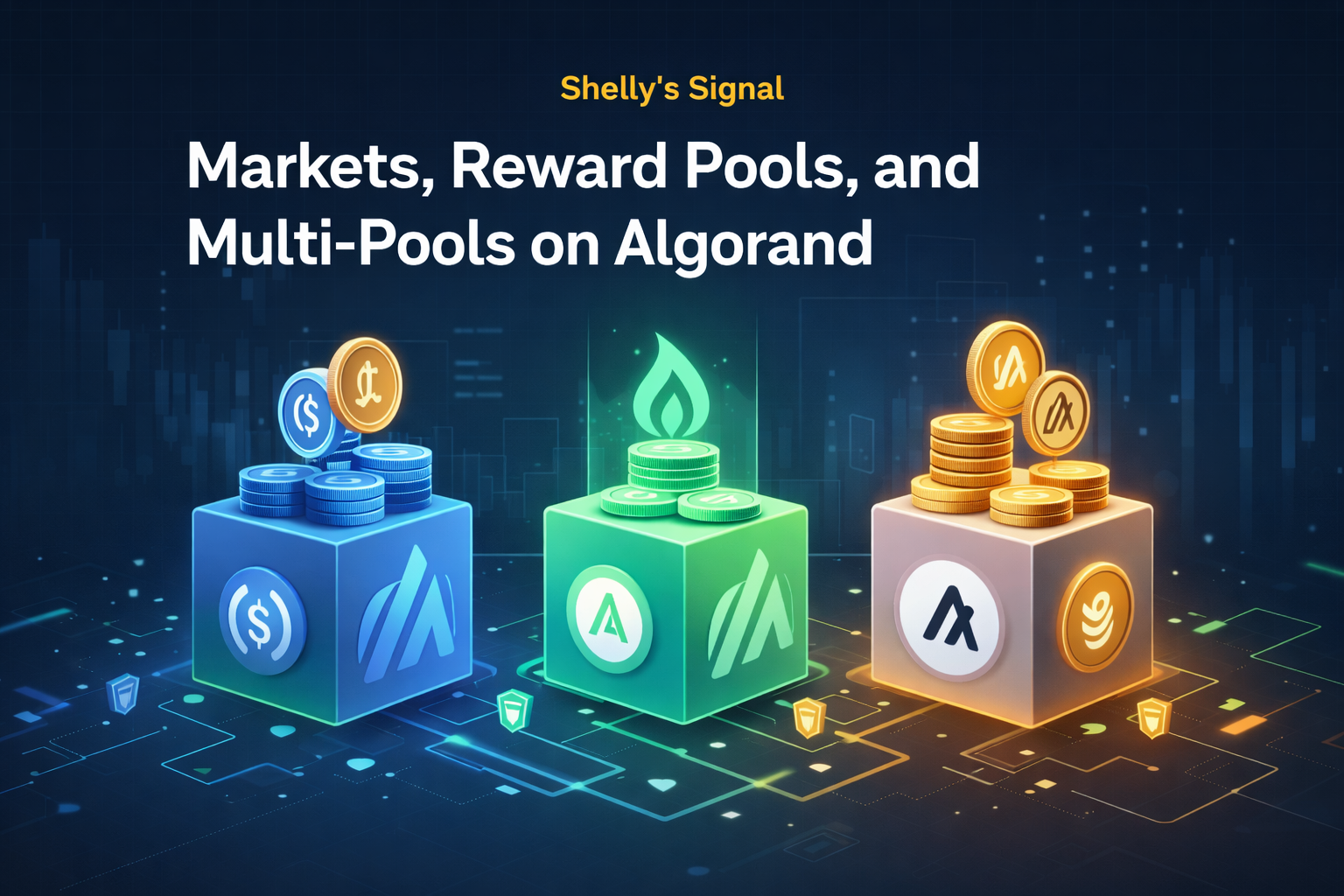
DorkFi on Algorand is evolving in three related directions: how markets are structured, how rewards are layered, and how capital can move inside the protocol. Together they point toward a system built for different kinds of assets and clearer intent—not a single blended experience for every position.
New markets
DorkFi has introduced new markets. Among them:
- A-markets: tALGO, xALGO
- B-markets: USDC, ALGO
The point is not only that the set of markets grew. It is that the structure of the system matters.
These markets reflect different capital behaviors: intrinsic yield assets such as tALGO and xALGO sit alongside pure lending markets such as USDC and ALGO. Not all capital behaves the same, and the protocol should not assume it does.
This is part of building a design where capital can move with intent, yield is not artificially smoothed across incompatible positions, and utilization can emerge from real use rather than being forced into a uniform shape.
Algorand reward pool
On Algorand, DorkFi combines consensus staking rewards and lending yield into a single reward layer.
That combination supports several practical goals:
- Competitive target APRs even when utilization is low
- Sustainable yield without depending only on borrowing demand
- More automated, sustainable operations over time
In practice, deposits can stay productive while markets and participation patterns still mature.
Users should expect to review positions and claim rewards where applicable on a roughly monthly cadence. The full mechanics of how reward pools are implemented and communicated on-chain will be covered in official documentation to follow; this post does not spell out every detail.
Multi-pools
Multi-pools enable lending arbitrage-style opportunities without leaving DorkFi.
They do two things that matter for operators and advanced users:
- Access across pool assets, including both A-market and B-market assets
- Participation in a B-market using an asset that is not part of the “simple” pair for that market
Capital can therefore reallocate inside the protocol instead of exiting to chase spreads elsewhere. That is internal capital efficiency and internal market access: fewer forced round-trips, more coherent routing of liquidity.
Multi-pools are available on Algorand for WAD, USDC, and ALGO.
Direction
The aim of these changes is not simply to list more markets or knobs. It is to make DorkFi’s capital layer more coherent: markets that respect how different assets behave, a reward layer that can stay credible at varying utilization, and paths for capital to move across opportunities while remaining inside the same system. What comes next is continued refinement of that stack—and clear, operator-grade communication as the details settle.